-
Rotator Cuff Injury
Rotator Cuff Injury
Pain, stiffness, an injury that won’t heal — if it’s keeping you from moving normally, we likely treat it. Here are the conditions we see most across our 8 Texas clinics. No referral needed to start.
Recovering from rotator cuff injuries: How physical therapy accelerates recovery from rotator cuff injuries
What is rotator cuff and rotator cuff injury?
The rotator cuff is a group of muscles which provides stability to shoulder joint. The rotator cuff consists of four muscles: Subscapularis muscle, Teres Minor muscle, Supraspinatus muscle and Infraspinatus muscle. Rotator cuff tear is classified when at least two tendons are completely torn or at least one of the two tendons are retracted beyond the top of the humeral head.
These rotator cuff tears can be further divided into 5 categories:
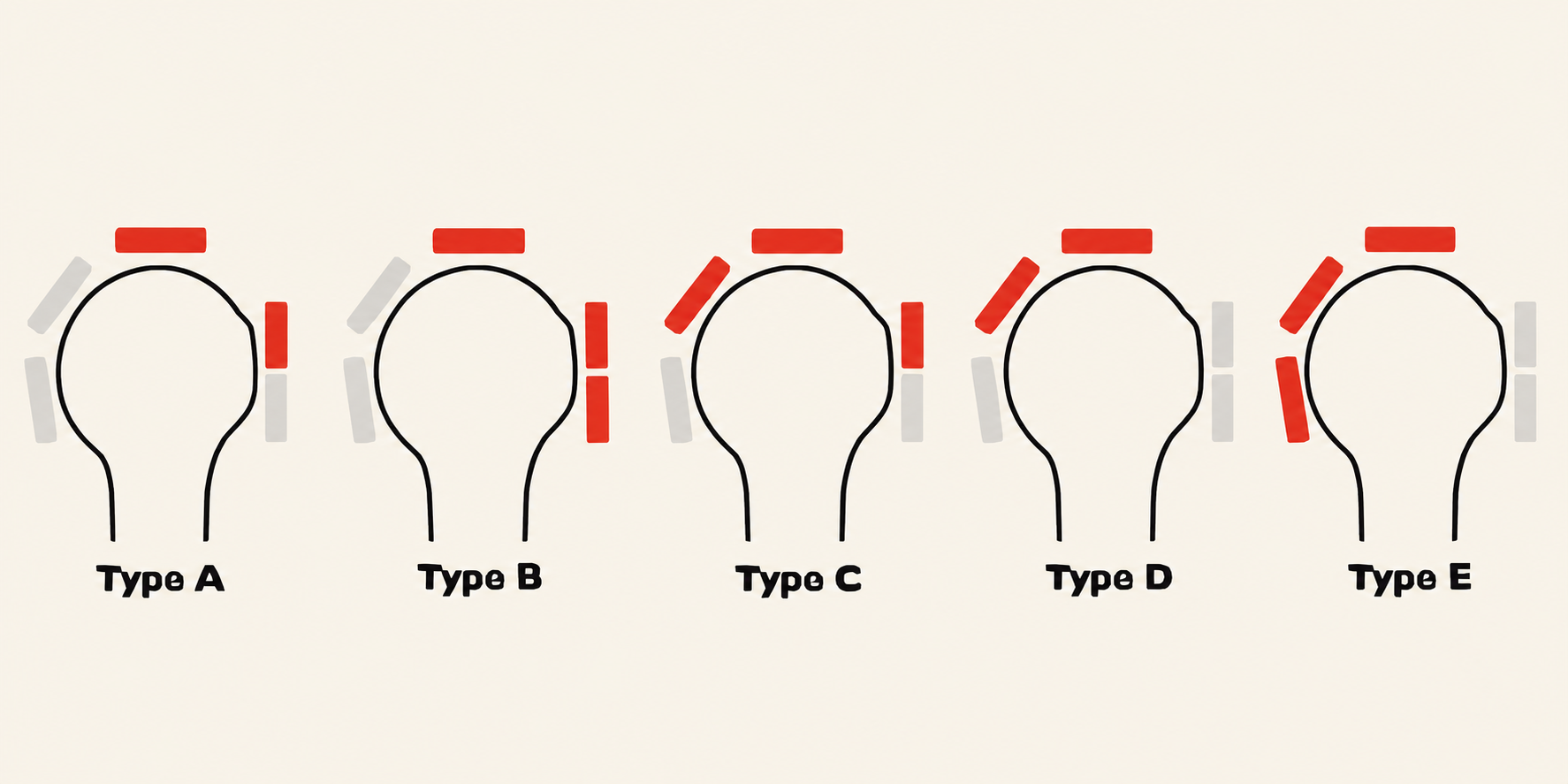
Type A: supraspinatus & superior subscapularis tears
Type B: supraspinatus and entire subscapularis tears
Type C: supraspinatus, superior subscapularis & infraspinatus tears
Type D: supraspinatus & infraspinatus tears
Type E: supraspinatus, infraspinatus & teres minor tear
Small tear: less than 1 cm
Medium tear: 1–3 cm
Large tear: 3–5 cm
Massive tear: greater than 5 cm.
CAUSES
Repetitive micro trauma to the involved side.
Severe traumatic injury like falling on outstretched hand, shoulder dislocation, or injury caused by unexpected force in pushing or pulling.
In old age because of degenerative changes.
SIGNS AND SYMPTOMS
Pain at night, especially lying down on involved side.
Pain with all overhead activities.
Weakness of involved muscle.
Stiffness in shoulder joint.
Examination by physical therapist for injury of different muscles:
Special tests are performed by therapist which reproduces the symptoms are considered as positive. Different tests for different muscles are performed passively on the patients.
Lift-off test and Passive Lift Off Test
Belly Press
Belly-off sign
Bear Hug Test
External rotation lag sign: 0° and 90°
Jobe’s test
Drop arm test
Neer test
Test for Teres minor:
Hornblower’s Sign
REHABILITATION
Acute phase: pain control management by modalities like therapeutic heat, cryotherapy, IFT, these modalities help in reduction of inflammation also. To prevent atrophy and contractures passive ROM is started. Periscapular muscle strengthening is used to improve scapulohumeral rhythm and manual therapy and scapular mobilisations are used along with strengthening to maintain and improve motion and thoracic kyphosis. Then progressed to active assisted and active ROM, isometrics and closed kinetic exercises to increase motor control. Targeted stretching of posterior capsule like sleepers stretches are done. Kinesiotaping to improve shoulder kinematics and enhance neuromuscular control.
Recovery phase: painless full ROM is achieved in this phase. Scapular stabilization exercises like low rows, prone scapular retraction/ squeeze, wall pushups, scapula pushups. Strengthening of deltoids, internal and external rotators by isometrics in supine to standing positions then progressed to resistance. Then progressed to eccentric exercises to strengthen all the muscles.