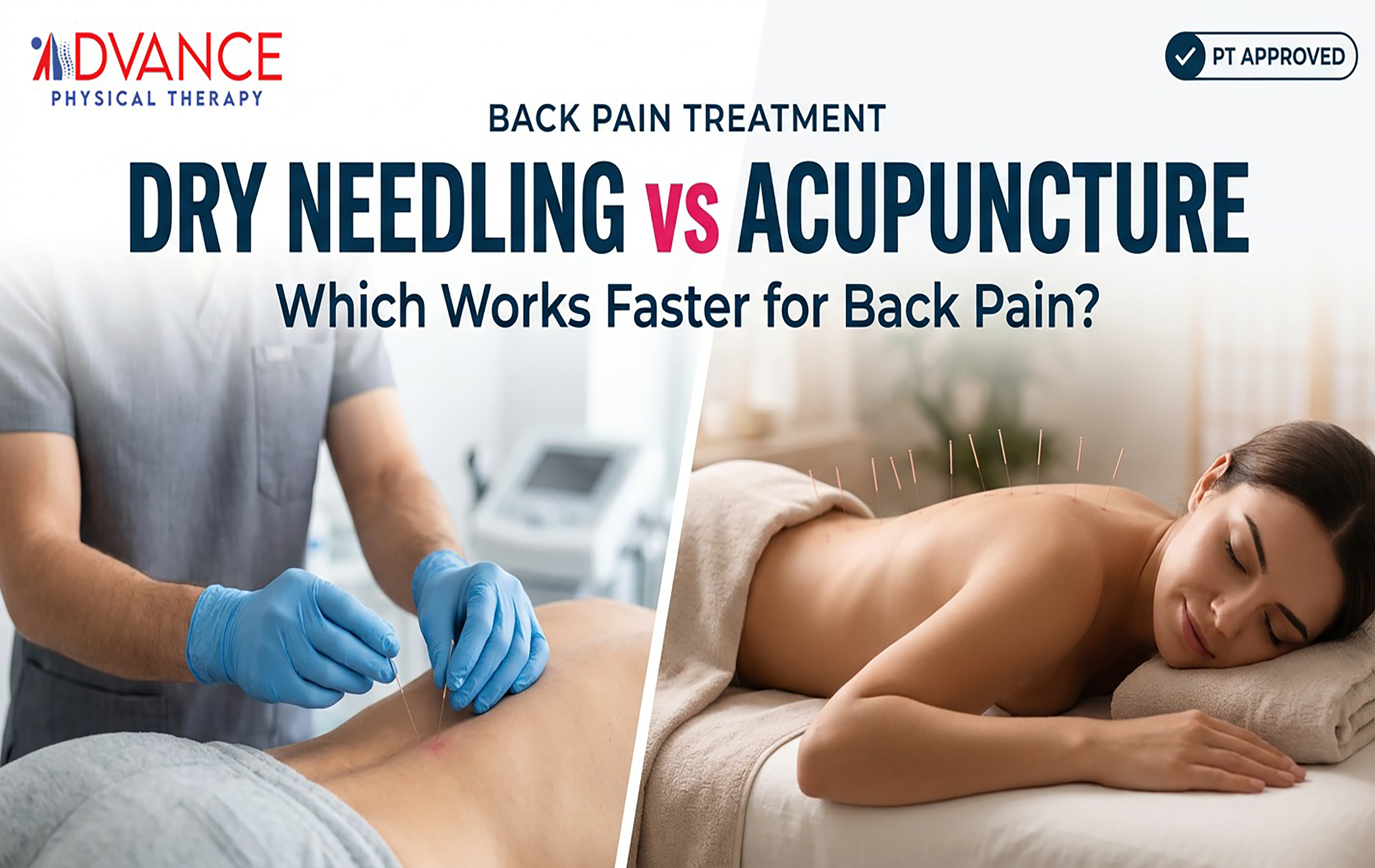
Back pain has a way of making you try anything. And at some point, someone probably suggested either acupuncture or dry needling — or maybe both. Both use thin needles. Both are known to relieve pain. But if you’re dealing with a bad back right now, you don’t have time for a slow fix.
So the real question is: between dry needling vs acupuncture, which one actually gets you out of pain faster?
In this article, we’ll break down exactly how each treatment works, compare the evidence, and give you a straight answer — based on the type of back pain you have. No fluff, no vague “it depends.” Just clear, useful information from the physical therapists at Advance Physical Therapy.
Quick Answer: For muscle-related or acute back pain, dry needling therapy typically produces faster relief (often within 1–3 sessions). For chronic, systemic, or stress-driven back pain, acupuncture can be equally effective — or better. Read on for the full breakdown.
What Is Dry Needling?
Dry needling is a modern physical therapy technique based on Western anatomy and neuroscience. A licensed physical therapist inserts a thin, sterile filament needle directly into a muscle trigger point — those tight, painful knots you can feel in your lower back or shoulders.
The moment the needle reaches the trigger point, it provokes a brief involuntary muscle twitch. That twitch is actually a good sign — it means the muscle is releasing its tension. Blood flow increases to the area, inflammation begins to resolve, and your body kicks into healing mode.
If you’re searching for dry needling near me, it’s worth knowing that dry needling treatment is typically performed by physical therapists — not acupuncturists — and is rooted in evidence-based medicine, not traditional Eastern philosophy.
Dry needling therapy works especially well for:
- Lower back muscle knots and myofascial trigger point pain
- Acute back strains from lifting, sports, or sudden movements
- Upper and lower back stiffness from prolonged sitting or poor posture
- Sciatica pain with a muscular component
- Sports injuries and post-activity soreness
What Is Acupuncture?
Acupuncture is a 2,500-year-old healing practice from Traditional Chinese Medicine (TCM). Needles are placed at specific points along energy pathways called meridians to restore the flow of Qi — the body’s vital energy.
From a modern scientific standpoint, acupuncture stimulates nerve endings, triggers the release of natural pain-relieving chemicals (endorphins), and can reduce systemic inflammation. Whether you subscribe to TCM philosophy or not, the physiological effects are well-documented.
Sessions tend to be longer and more meditative — needles are typically retained for 20 to 45 minutes, and the treatment addresses the whole body, not just the site of pain.
Acupuncture works best for:
- Chronic lower back pain that has persisted for months or years
- Back pain linked to stress, anxiety, or poor sleep
- Systemic inflammation and nerve-related pain
- Patients looking for a holistic, whole-body approach
- Conditions involving multiple body systems alongside back pain
Dry Needling vs Acupuncture: The Key Differences
At first glance, acupuncture vs dry needling looks identical — same thin needles, same general idea. But the differences go much deeper than the surface. Here’s how they compare across the factors that matter most:
| Factor | Dry Needling | Acupuncture |
|---|---|---|
| Origin | Western Medicine (1940s) | Traditional Chinese Medicine (2,500+ yrs) |
| Basis | Anatomy & neurophysiology | Energy meridians (Qi) |
| Performed by | Licensed Physical Therapist | Licensed Acupuncturist |
| Target | Muscle trigger points / knots | Meridian points across the body |
| Session length | 15–30 minutes | 45–60 minutes |
| Speed of relief | Often 1–3 sessions ✓ | Usually 4–8 sessions |
| Best for | Acute muscle pain, sports injuries | Chronic pain, stress-related issues |
| Insurance | Usually covered via PT plan | Varies by plan |
The most important distinction? Dry needling targets specific muscle trigger points using anatomy-based precision. Acupuncture targets energy points along meridians to influence the body’s overall balance. Same tool. Completely different map.
Which Works Faster for Back Pain? (Honest Answer by Pain Type)
This is the question everyone actually wants answered. And the honest truth is — the faster treatment depends entirely on what’s causing your back pain. Here’s a clear breakdown:
| Back Pain Type | Dry Needling | Acupuncture |
|---|---|---|
| Muscle knot / Trigger point pain | 1–2 sessions | 3–5 sessions |
| Post-workout / sports injury | 1 session (very fast) | 3–4 sessions |
| Acute lower back strain | 2–4 sessions | 4–6 sessions |
| Sciatica with muscle involvement | 3–5 sessions | 5–8 sessions |
| Chronic back pain (6+ months) | 3–6 sessions | Equally good, holistic |
| Stress-related back tension | Helps the muscle component | Better overall approach |
| The Pattern: Dry needling treatment vs acupuncture shows a consistent speed advantage when the cause is muscular. That’s because dry needling goes directly to the source — the tight, overloaded muscle — and releases it mechanically. Acupuncture works at a broader neurological level, which takes more time to accumulate. |
Why Does Dry Needling Work Faster for Most Back Pain?
Most back pain — whether it’s from sitting at a desk all day, a weekend workout gone wrong, or years of poor posture — has a significant muscular component. That tight, achy lower back you feel? Chances are there are trigger points in your lumbar muscles that are holding that tension.
Dry needle therapy goes directly to those points. The needle causes an immediate twitch response that resets the muscle’s resting tension, increases blood flow, and accelerates recovery. Many patients notice a significant difference within 24–48 hours of their first session.
Acupuncture, by contrast, works by stimulating the nervous system globally. It’s an accumulative process — each session builds on the last. For chronic conditions, this is actually a strength. But for an acute back muscle problem, you’re waiting longer for results that dry needling can often deliver in one or two visits.
What Does the Research Say?
Evidence for Dry Needling
A 2023 umbrella review covering 36 systematic studies confirmed that dry needle vs acupuncture research consistently shows dry needling outperforming no treatment or sham treatment for musculoskeletal pain. The research is particularly strong for:
- Myofascial trigger point pain — the most common type of back pain
- Neck and lower back pain when combined with exercise therapy
- Short-term pain relief, typically noticeable within 1–3 sessions
Evidence for Acupuncture
The National Center for Complementary and Integrative Health (NCCIH) recognizes acupuncture as clinically effective for chronic low back pain. Key research findings include:
- Significant pain reduction in chronic low back pain cases over 6–10 sessions
- Comparable outcomes to conventional pain medication for long-term management
- Measurable reduction in patients’ need for pain medication
| Bottom Line: Both treatments are evidence-backed. What is dry needling vs acupuncture in terms of research strength? Dry needling has stronger evidence for acute and muscular pain with faster results. Acupuncture has stronger evidence for chronic pain management and long-term relief. |
Can You Get Dry Needling Without Acupuncture?
Absolutely — and for most back pain patients, you don’t need acupuncture at all. If your pain is primarily muscular (which is the most common presentation), dry needling therapy on its own — especially when integrated into a full physical therapy plan — is often the more effective and faster route.
At Advance Physical Therapy, dry needling is never used in isolation. Our therapists combine it with manual therapy, corrective exercises, and postural retraining to not just relieve your pain faster, but prevent it from coming back.
Frequently Asked Questions
Does dry needling hurt more than acupuncture?
They feel different. Dry needling causes a brief, sharp muscle twitch — intense for a second, then gone. Acupuncture needles are placed more gently and retained longer, with a dull, heavy sensation. Most patients find both manageable. Post-session soreness (like after a workout) is more common with dry needling and typically fades within 24–48 hours.
How many sessions of dry needling do I need for back pain?
For acute muscular back pain: most patients see significant improvement in 3–6 sessions. For more complex or chronic cases, your physical therapist will create a personalized plan. Unlike acupuncture, dry needling sessions are shorter and results often appear sooner.
Is dry needling covered by insurance?
Because dry needling is typically performed as part of a physical therapy session, it is frequently covered under your PT benefits. Acupuncture coverage varies widely. We recommend calling your insurer or reaching out to our team — we’re happy to help verify your coverage before your first appointment.
Who should NOT get dry needling?
Dry needling is not recommended if you are pregnant, have a needle phobia, are on blood thinners, or have certain skin conditions at the treatment site. Your physical therapist will complete a full health screening before recommending it.
Can dry needling and physical therapy be done together?
Yes — and it’s actually the most effective approach. Combining dry needling with targeted exercise therapy and manual therapy produces faster, more lasting results than either treatment alone. This is standard practice at our clinics.
| Ready to Get Rid of Your Back Pain — Fast?
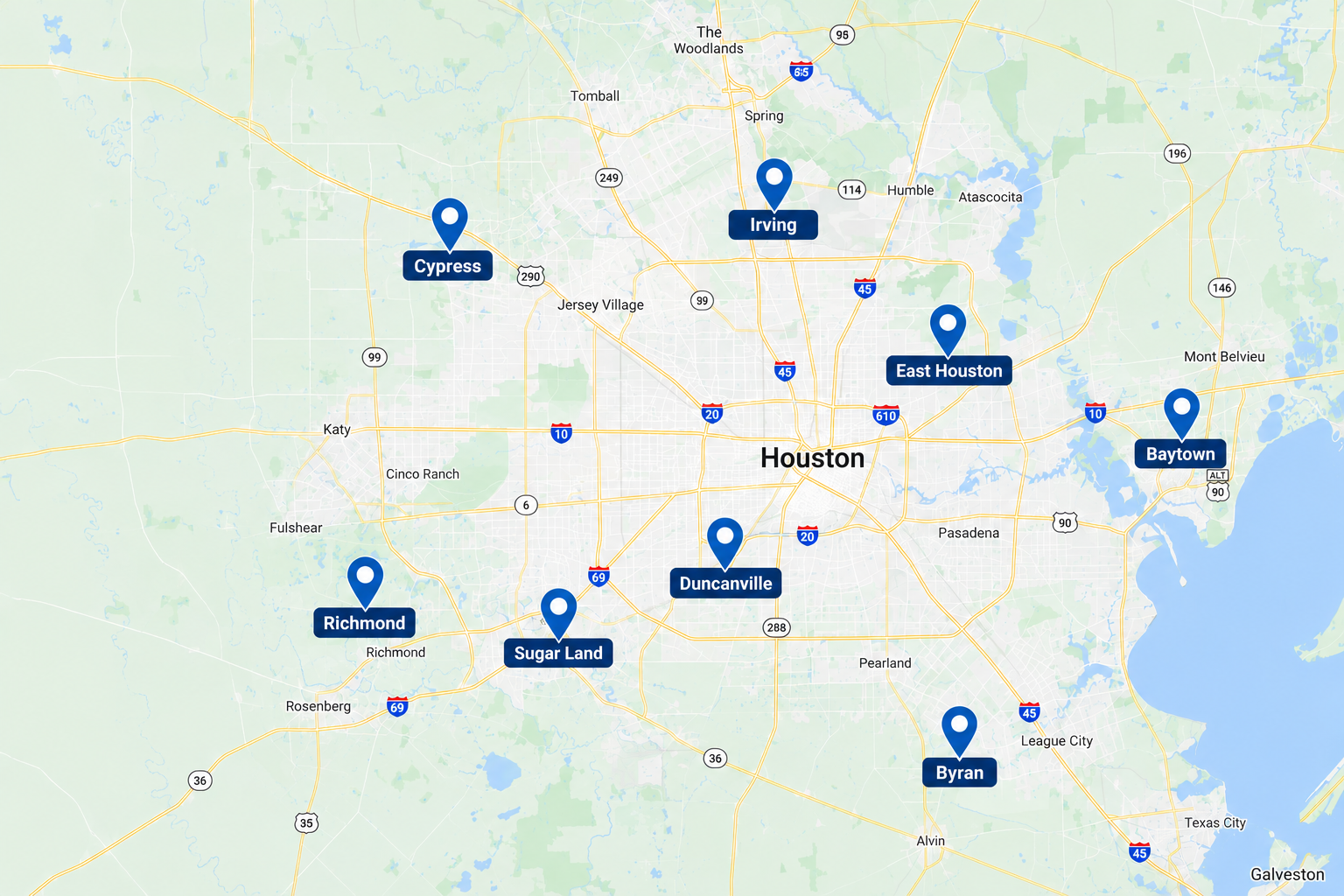
Our physical therapists at Advance Physical Therapy specialize in dry needling therapy for back pain. We’ll assess your exact condition and build a treatment plan that gets you results — not just temporary relief. Serving Houston, Dallas and College Stationsurrounding areas | Direct access — no referral needed 👉 Book your appointment at the physical therapy clinic near me — Advance PT |
The Takeaway
When it comes to dry needling vs acupuncture for back pain, neither treatment is universally “better” — but one is almost always faster for the type of back pain most people are dealing with.
If your back hurts because of tight muscles, knots, a strain, or a sports injury — dry needling therapy will likely give you faster, more targeted relief. It goes straight to the source, releases the muscle, and most patients feel the difference within a session or two.
If your pain is chronic, systemic, or tied to stress and lifestyle factors — acupuncture’s whole-body approach may complement or even outperform dry needling over time.
And if you want the most complete, fastest recovery possible? A physical therapy plan that combines dry needling with hands-on manual therapy and corrective exercise is your best option — full stop.
| At Advance Physical Therapy, we offer expert dry needling therapy as part of a comprehensive treatment plan designed around your specific back pain. Our licensed therapists will help you find the fastest, most lasting path to relief. |